Weight Loss Meal Plan: What to Actually Eat for Steady Progress
By:Author:Herletics Editorial
Updated on:October 28, 2026

- The Myth That One Food Group Is the Enemy
- How a Weight Loss Meal Plan Actually Works
- What Changes How Fast a Meal Plan Works
- What a Realistic Day of Eating Looks Like
- Making a Meal Plan Work Around a Full Week
- When to Expect Changes on a Meal Plan
- Common Mistakes That Stall a Meal Plan
- Building a Weight Loss Meal Plan With Herletics
- Turning a Meal Plan Into a Lasting Habit
A weight loss meal plan works when it creates a steady gap between what you eat and what your body uses, built from meals you can actually repeat week after week.
The mechanism is simple arithmetic: eat somewhat less energy than you burn, keep protein and fibre high enough to stay full, and the gap does the rest over time.
This article covers the myths worth dropping, how the maths actually works, what changes the outcome, a sample day and week, and the mistakes that quietly derail otherwise good plans.
The Myth That One Food Group Is the Enemy
Cutting out carbs, fats, or entire food groups does not speed up weight loss on its own, and it will not target fat on one part of the body no matter how the plan is marketed.
The body decides where it loses fat from based on its own patterns, not on which exercises you do or which food you avoid - there is no way to choose the area.
The real answer is less dramatic and more useful: total energy eaten over the week matters more than which single ingredient gets blamed, and a plan that bans entire food groups usually just gets abandoned sooner.
How a Weight Loss Meal Plan Actually Works
There are two moving parts worth understanding before you plan a single meal: the energy gap, and the role protein and fibre play in keeping that gap sustainable.
The Energy Gap Does the Heavy Lifting
Weight loss happens when the body uses more energy than it takes in from food, averaged across days rather than judged meal by meal. A meal plan's job is to make that gap consistent without leaving you hungry enough to abandon it by Thursday.
Protein and Fibre Keep You on the Plan
Meals built around protein and fibre tend to keep you fuller for longer, which makes the energy gap easier to hold without constant willpower. This is less about any single food and more about structure: protein at most meals, vegetables or whole grains for volume, and fats included rather than feared.
Neither part works well alone - a calorie gap with no protein leaves you hungry, and plenty of protein with no gap at all just maintains where you are.
What Changes How Fast a Meal Plan Works
Three things move the needle more than anything else, and they matter in this order.
The Three Biggest Levers
- How consistently you eat within your plan - a good plan followed five days out of seven beats a perfect plan followed for two.
- How much protein shows up at each meal - it protects the fullness signal that keeps the whole plan from collapsing by evening.
- How much the plan matches food you already like - meals you enjoy get repeated; meals you tolerate get skipped within a fortnight.

Notice that none of these levers is a single magic food or a banned ingredient - they are all about repeatability, which is the part most plans ignore.
What a Realistic Day of Eating Looks Like
Here is one example of how a day might look when it is built around protein, fibre and food you can actually repeat.
| Meal | Example |
|---|---|
| Breakfast | Greek yoghurt, berries, oats |
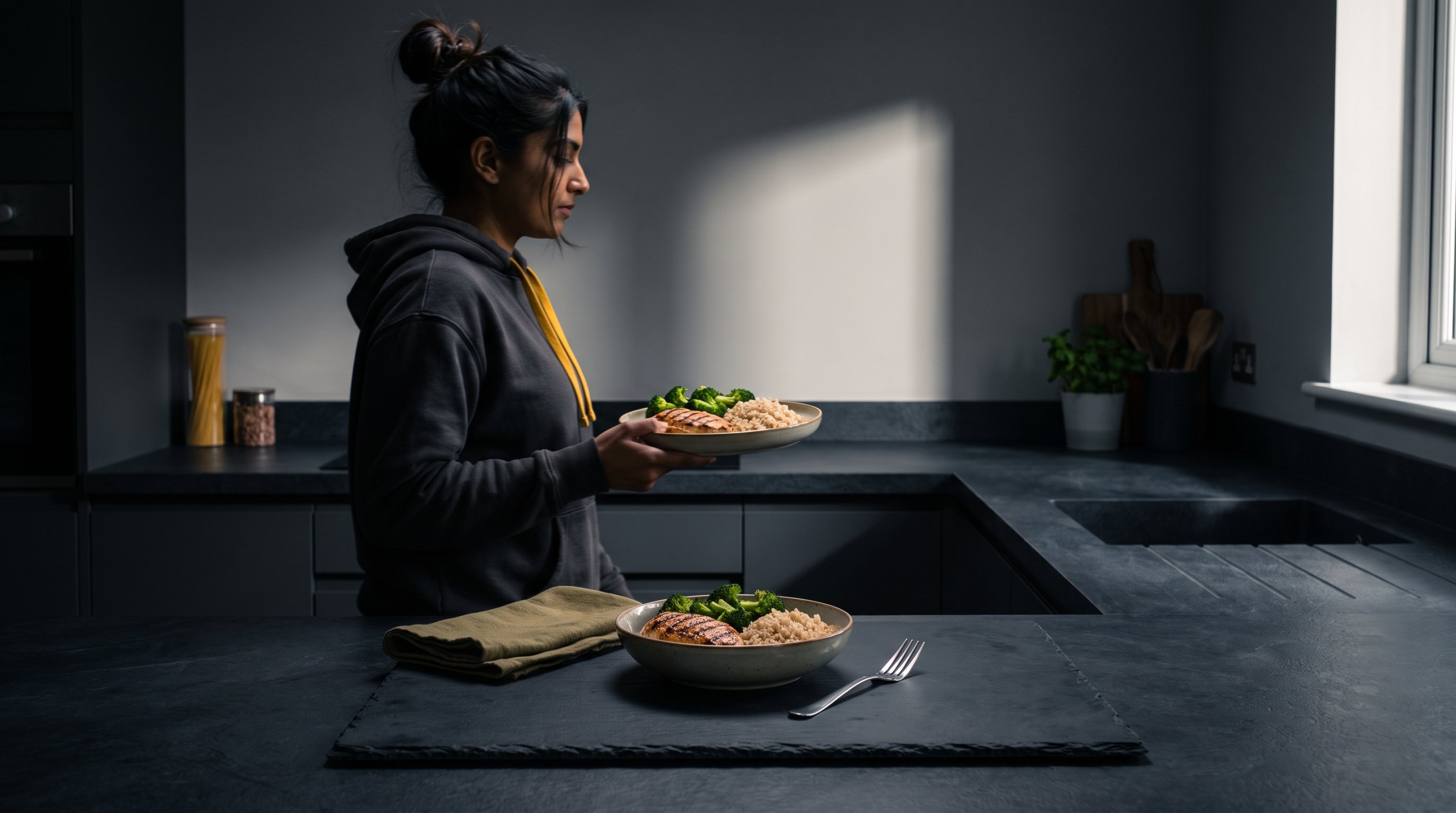
| Lunch | Grilled chicken, rice, salad |
| Snack | Apple with peanut butter |
| Dinner | Salmon, potatoes, vegetables |
| Evening | Herbal tea or cottage cheese |
Swap any of these for equivalents you prefer - the pattern matters more than the exact ingredients: protein at each meal, fibre from vegetables or fruit, and a modest portion rather than an extreme one.
Making a Meal Plan Work Around a Full Week
Most people do not fail a meal plan because the food is wrong - they fail because the plan assumes a quieter week than the one they actually have.
A plan that survives a busy Tuesday needs some repetition built in: the same two or three breakfasts, a lunch you can make ahead, and one dinner that takes under twenty minutes for the nights nothing goes to plan.
This is where a customized meal plan with recipes built around food you already like helps, since it removes the daily decision fatigue of working out what fits your goals, and our app includes this alongside tools for tracking water, steps and weight in one place.
When to Expect Changes on a Meal Plan
There is no fixed week when a meal plan suddenly starts working - it works from the first day the energy gap is in place, but the signs of that take longer to show up than most people expect.
The early weeks are mostly about building the habit of planning meals ahead rather than deciding what to eat in the moment, which is the part that determines whether the plan survives long enough to matter.
This is also where most people quit - not because the plan failed, but because the early weeks feel slow and unglamorous before the pattern becomes automatic.
Common Mistakes That Stall a Meal Plan
Cutting Calories Too Hard, Too Fast
A steep cut feels productive but usually triggers stronger hunger and more skipped days within a week. A smaller, steadier gap holds up far better over a full month.
Treating One Bad Meal As a Failed Day
One meal does not undo a plan any more than one good meal fixes it - the average across the week is what counts. Eating normally at the next meal is the whole fix.

Copying Someone Else's Exact Meals
A plan built for someone else's schedule, tastes and portion needs rarely survives contact with your own week. Adjusting portions and swapping meals you dislike keeps the plan yours rather than borrowed.
Ignoring Protein at Breakfast
Starting the day on carbohydrate alone often means stronger hunger by mid-morning and a harder afternoon to manage. Adding a protein source at breakfast tends to flatten that hunger curve.
Planning Meals but Not the Week Around Them
A meal plan without a shopping list or prep slot gets replaced by whatever is fastest on a busy evening. Blocking even twenty minutes to prep ahead removes most of that risk.
Building a Weight Loss Meal Plan With Herletics
A meal plan only works if it is easy enough to follow on an ordinary Tuesday, not just on a calm Sunday when you have time to plan properly.
Herletics builds a customized meal plan from over 1000 recipes, alongside metabolism-focused food tips, nutrition guides and progress tracking for water, steps and weight so the whole week stays in one place instead of scattered across notes and apps.
Paired with the Military Calisthenics Workout Plan, motivating challenges keep the nutrition side and the movement side pulling in the same direction rather than working against each other.

Get Your Training Plan
Train Like a Warrior
Turning a Meal Plan Into a Lasting Habit
The best weight loss meal plan is the one you are still following in three months, not the one that looked perfect on day one.
Start with one change this week - swap a snack for something with protein, or plan tomorrow's lunch tonight - and let the plan grow from there; our app can carry the rest once that first habit sticks.
FAQ
No, a flexible plan built around an energy gap works just as well as a rigid one, and it tends to last longer. Strictness is not what drives results - consistency is.
Faster early changes usually reflect water shifts rather than fat, and they rarely hold once normal eating resumes. A steady, sustainable gap tends to outlast any short, extreme cut.
Decision fatigue - working out what to cook every single day - is what usually breaks a plan before the food itself does. A customized meal plan with Herletics removes that daily decision by laying the week out in advance.
Early changes often come from simple adjustments like cutting liquid calories or added portions, and those gains level off once the easy wins are used up. That's normal, and it usually means the plan needs small refinement rather than a complete rebuild.
Share this post