Budget Meal Prep for Women: How to Plan and Save Every Week
By:Author:Herletics Editorial
Updated on:October 16, 2026
- The Myth That Cheap Food Means Boring Food
- How Budget Meal Prep Actually Cuts Grocery Costs
- What Actually Changes Your Weekly Food Spend
- A Sample Week of Budget-Friendly Meal Prep
- Making Budget Meal Prep Fit a Busy Week
- When Budget Meal Prep Starts Feeling Normal
- Common Mistakes That Quietly Inflate the Grocery Bill
- Simplifying Budget Meal Prep for Women With Herletics
- Keeping Your Grocery Budget Under Control Long Term
Budget meal prep for women comes down to one habit: cooking a few base ingredients in bulk, then splitting them across the week so you're not buying lunch or ordering dinner out of tiredness.
It works because repetition cuts cost at every stage - fewer shopping trips, less food waste, and bigger pack sizes that cost less per portion.
This guide covers the myth around budget eating, how the savings actually add up, a sample week, where people overspend, and how to keep it going past the first fortnight.
The Myth That Cheap Food Means Boring Food
A lot of people assume budget meal prep means plain rice and chicken on repeat, forever. That's not actually true.
The cost savings come from the method - buying in bulk, reusing bases, cooking once for several meals - not from stripping out flavour or variety.
Swap the sauce, swap the spice blend, swap the vegetable, and the same base ingredients can taste completely different by Thursday.
The real answer is that budget and variety aren't in conflict - they just need a bit of planning so you're not buying five separate specialty items for five separate meals.
How Budget Meal Prep Actually Cuts Grocery Costs
Two mechanisms do most of the work here: batch cooking and reduced waste.
Batch Cooking Lowers the Per-Meal Price
Buying a large bag of rice, a tray of chicken thighs, or a sack of root vegetables is almost always cheaper per portion than buying small quantities repeatedly through the week.
Cooking that bulk batch once also means less gas or electricity used compared with cooking five separate small meals on five separate days.
Planning Ahead Stops Food From Going to Waste
When meals are mapped out in advance, ingredients get used before they spoil, instead of sitting in the fridge until they're binned.
Less waste means every pound spent at the shop actually turns into a meal eaten, rather than money thrown away with the spoiled produce.
What Actually Changes Your Weekly Food Spend
Not every habit saves the same amount. These three matter most, in order.
The Biggest Levers on Your Grocery Bill
- Shopping with a list built from a plan - this stops impulse buys and duplicate ingredients sitting unused in the cupboard.
- Repeating a small number of base ingredients - buying one large bag of grains or one tray of protein instead of five different items keeps the per-portion cost down.
- Cooking in one or two sessions a week - fewer cooking sessions mean less energy used and fewer chances to order food out of convenience.
A Sample Week of Budget-Friendly Meal Prep
Here's a simple structure to copy, built around two cooking sessions rather than daily cooking.
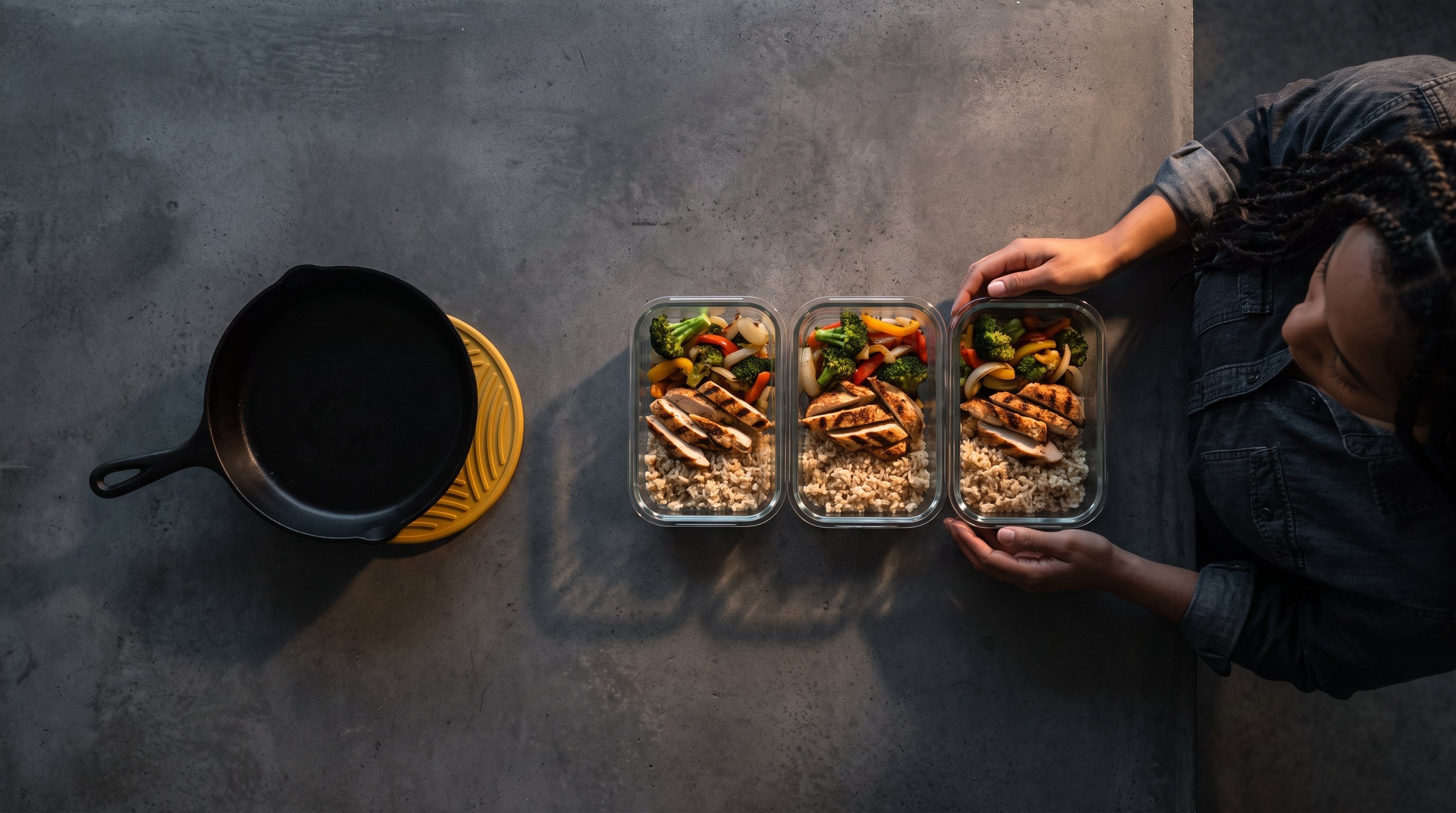
A Two-Session Weekly Prep Plan
- Sunday session - cook a large batch of grains, roast a tray of mixed vegetables, and grill or bake a batch of protein in one go.
- Split into containers - divide the batch into five or six portions straight away so lunch and dinner are already sorted for the week.
- Midweek top-up - a shorter second session on Wednesday to cook a fresh vegetable or swap the sauce, keeping the second half of the week from feeling repetitive.
- Keep one flexible meal - leave one dinner unplanned for using up whatever's left in the fridge, which cuts down on waste at the end of the week.
Making Budget Meal Prep Fit a Busy Week
Budget meal prep only sticks if it fits around the rest of your life, not the other way round.
That means picking two cooking windows that actually exist in your week, rather than planning around an ideal schedule you won't keep.
A meal plan built around food you already like makes this easier, since you're not forcing down recipes you'll abandon by Tuesday.
Customized meal plans with workout tracking mean the eating side and the movement side sit in one place instead of two separate habits competing for your attention.
When Budget Meal Prep Starts Feeling Normal
The first week or two usually feels like extra effort, because you're learning new portion sizes and a new shopping list.
Once the base ingredients and cooking sessions become familiar, the planning part gets faster and the grocery list barely changes week to week.
There's no fixed point where it suddenly clicks - it's gradual, and it depends on how often you repeat the routine rather than how hard you try in any single week.
Common Mistakes That Quietly Inflate the Grocery Bill
Shopping Without a List
Walking into a shop without a plan leads to duplicate items and impulse extras that don't fit any planned meal. Write the list from the week's meals first, then shop against it.
Buying Too Many Different Proteins or Grains
Five different specialty ingredients for five different meals costs more than two base ingredients reused across the week. Pick one or two staples and build variety through sauces and spices instead.

Cooking a New Meal Every Single Night
Daily cooking from scratch uses more energy and more small-quantity ingredient purchases than batch cooking. Two sessions a week usually covers five or six meals with less effort and lower cost.
Letting Fresh Produce Go Off Before It's Used
Buying fresh vegetables without a plan for when they'll be cooked is one of the fastest ways to lose money to waste. Roast or freeze produce early in the week if it won't be used by midweek.
Skipping Leftovers Instead of Repurposing Them
Throwing out extra portions because they feel repetitive wastes food that's already paid for. A different sauce or a new side can make the same base ingredients feel like a different meal.
Simplifying Budget Meal Prep for Women With Herletics
Planning meals around a budget takes less guesswork when the recipes are already built for you.
Herletics includes a customized meal plan with over 1000 easy-to-follow recipes, which means less time spent figuring out what to cook and more time actually cooking it.
The app also pairs that with progress tracking for water, weight, and steps, so the nutrition side of budget meal prep sits next to the habits that keep you consistent.
Get Your Training Plan
Train Like a Warrior
Keeping Your Grocery Budget Under Control Long Term
Pick one cooking session this week, build a short list from two or three meals, and shop against that list rather than wandering the aisles.
That single change - planning before shopping - does more for your weekly spend than any specific recipe ever will.
A meal-planning app can sit alongside that habit, giving you ready-made recipes and a place to track progress so budget meal prep stays simple rather than another thing to figure out alone.
FAQ
It depends on your current habits, but buying in bulk and cooking in batches generally costs less per portion than buying small quantities repeatedly or ordering food out. The biggest savings come from cutting impulse buys and reducing food waste.
Not if the base ingredients are reused but the sauces, spices and sides change through the week. Variety comes from how you season and combine the base, not from buying different ingredients every single day.
One longer session on a day off can cover most of the week, with a shorter midweek top-up only if you have time. Quick-to-follow recipes are designed to help if cooking time is the main barrier.
Swap in a different sauce, spice blend or side dish rather than starting from scratch with new ingredients. Herletics includes flexible options to help use up whatever's left before it goes to waste.
Share this post