Calisthenics for Woman: How Bodyweight Moves Fit Your Week
By:Author:Herletics Editorial
Updated on:October 28, 2026
- Does Calisthenics Actually Build Strength for Women?
- The Mechanics Behind Bodyweight Strength Gains
- How Many Calisthenics Sessions a Week Actually Help
- Why Bodyweight Training Beats Gym Habits You Won't Keep
- Fitting Bodyweight Training Around a Full Week
- The Spot Reduction Myth and What Actually Happens Instead
- What Actually Changes Your Calisthenics Results
- Common Mistakes Women Make Starting Calisthenics
- Building a Calisthenics Routine You Keep With Herletics
- Making Calisthenics a Habit That Actually Lasts
Calisthenics for woman simply means training with your own bodyweight - push-ups, squats, lunges, planks - rather than machines or free weights, and it works because muscles respond to resistance, not to the source of it.
Push your body against gravity often enough, with enough variety in angle and load, and the muscle has a reason to adapt. That reason doesn't care whether the resistance came from a barbell or your own hips.
This guide covers whether bodyweight training actually delivers results, how often you need to show up, what usually gets in the way, and how to keep it going once the first few weeks of enthusiasm fade.
Does Calisthenics Actually Build Strength for Women?
Yes - bodyweight training builds strength the same way any resistance training does, by making muscles work harder than they're used to.
A press-up loads the chest, shoulders and arms with a percentage of your own bodyweight. Change the angle - hands on a step, feet on a step, one leg lifted - and the percentage of load changes with it, which is how calisthenics keeps getting harder without needing extra equipment.
The honest arithmetic: if you can do 8 press-ups this month and 15 in a few months, the muscle has adapted - that's a strength increase you can count, not a guess.
Fat loss is a separate equation, driven by the gap between what you eat and what your body uses, and movement alone closes that gap slowly. Bodyweight training builds and maintains muscle while that gap does its work, which is why most people pair it with attention to food rather than training harder alone.
The Mechanics Behind Bodyweight Strength Gains
Two things are doing the work whenever you train with just your bodyweight - the angle of the movement and how close your muscles get to fatigue.
Angle and Load Do the Loading
A squat loaded by bodyweight alone is light; add a pause at the bottom or slow the descent and the same muscles work far harder for the same number of reps. Changing the angle of a push-up - incline, flat, decline - changes how much of your bodyweight the chest and shoulders actually have to move.
Fatigue Is the Real Trigger for Change
Muscles adapt when they're pushed close to their current limit, not simply when they're moved. That's why 3 sets of squats to the point your legs genuinely feel it beats 10 sets done comfortably - the signal to adapt comes from effort, not volume alone.
How Many Calisthenics Sessions a Week Actually Help
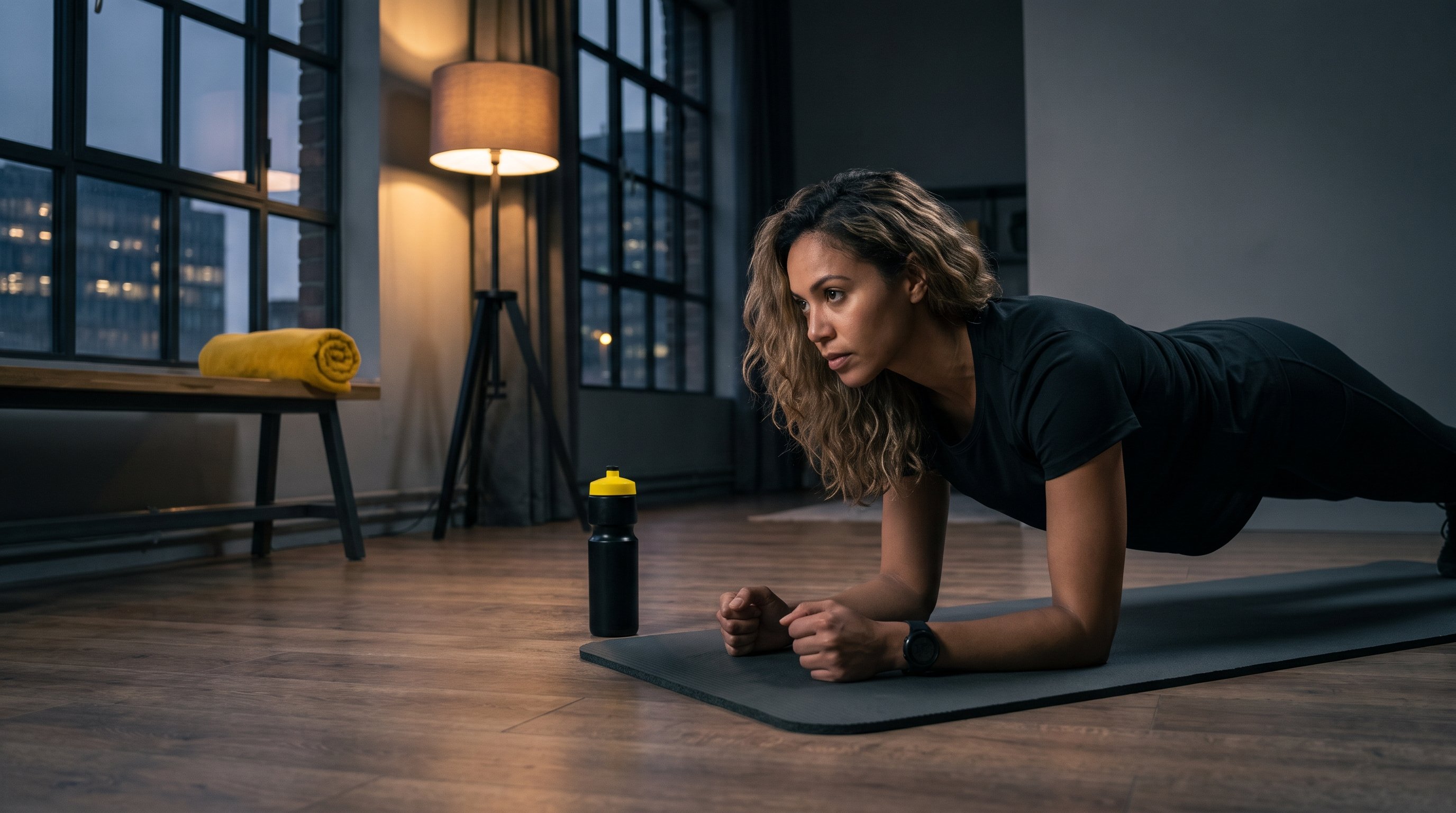
Most women see steadier progress from 3 to 4 sessions a week than from occasional long ones, because muscles need repeated exposure to keep adapting.
A Simple Weekly Split to Start From
Spreading training across the week - rather than cramming it into one session - gives muscles time to recover between loads while keeping the adaptation signal frequent.
| Day | Focus | Duration |
|---|---|---|
| Monday | Full body basics | 20-30 minutes |
| Tuesday | Rest or walking | Optional |
| Wednesday | Push and core | 20-30 minutes |
| Friday | Legs and glutes | 20-30 minutes |
| Saturday | Full body basics | 20-30 minutes |
Why Bodyweight Training Beats Gym Habits You Won't Keep
A gym membership only pays off if you actually go, and a packed gym schedule with commute, parking and queueing for equipment is where a lot of good intentions quietly die.
Calisthenics removes most of that friction - no drive, no waiting for a machine, no membership to justify. Fewer barriers mean more sessions actually happen, and sessions completed is what drives results, not how intense any single one felt.
This isn't about one method being superior in a lab sense - it's about which one you'll still be doing in month three.
Fitting Bodyweight Training Around a Full Week
Most weeks don't have a spare hour sitting around waiting to be filled with exercise - they have gaps of 20 minutes between other things.
Bodyweight training fits those gaps because it needs no setup beyond floor space and a few minutes. A short session before the day starts, during a lunch break, or once the kids are in bed all count.
This is where a structured plan helps more than willpower does - a guided bodyweight program lays out sessions by fitness level, so you're not deciding what to do on the spot, just following what's next.
The Spot Reduction Myth and What Actually Happens Instead
No exercise targets fat on one specific area of the body, and that includes ab workouts for the stomach or squats for the thighs - the body does not work that way.
Fat loss happens across the whole body, in a pattern that's largely set by your own genetics, not by which muscle you trained hardest that day. Training a muscle builds and strengthens that muscle; it doesn't decide where fat comes off first.
The honest version: strength training everywhere, paired with attention to food, changes how your whole body looks and functions over time - there's no shortcut that skips the whole-body part.
What Actually Changes Your Calisthenics Results
Three things matter more than anything else once you've picked a bodyweight routine.
The Factors That Move the Needle
- How many sessions you complete per month - consistency over weeks beats how hard any single session felt.
- Whether you progress the difficulty - the same press-up on day one and day sixty stops being a challenge, so the angle or rep count needs to climb.
- What you eat around training - muscle needs enough food to build, and fat loss needs a gap between intake and use, so nutrition decides more of the outcome than the workout alone.
Common Mistakes Women Make Starting Calisthenics
Going All-In for One Week, Then Stopping
Five sessions in week one often leads to zero in week two because recovery never happened. Spread fewer sessions across more weeks instead - the muscle needs the week two session as much as the week one one.
Never Changing the Angle or Reps
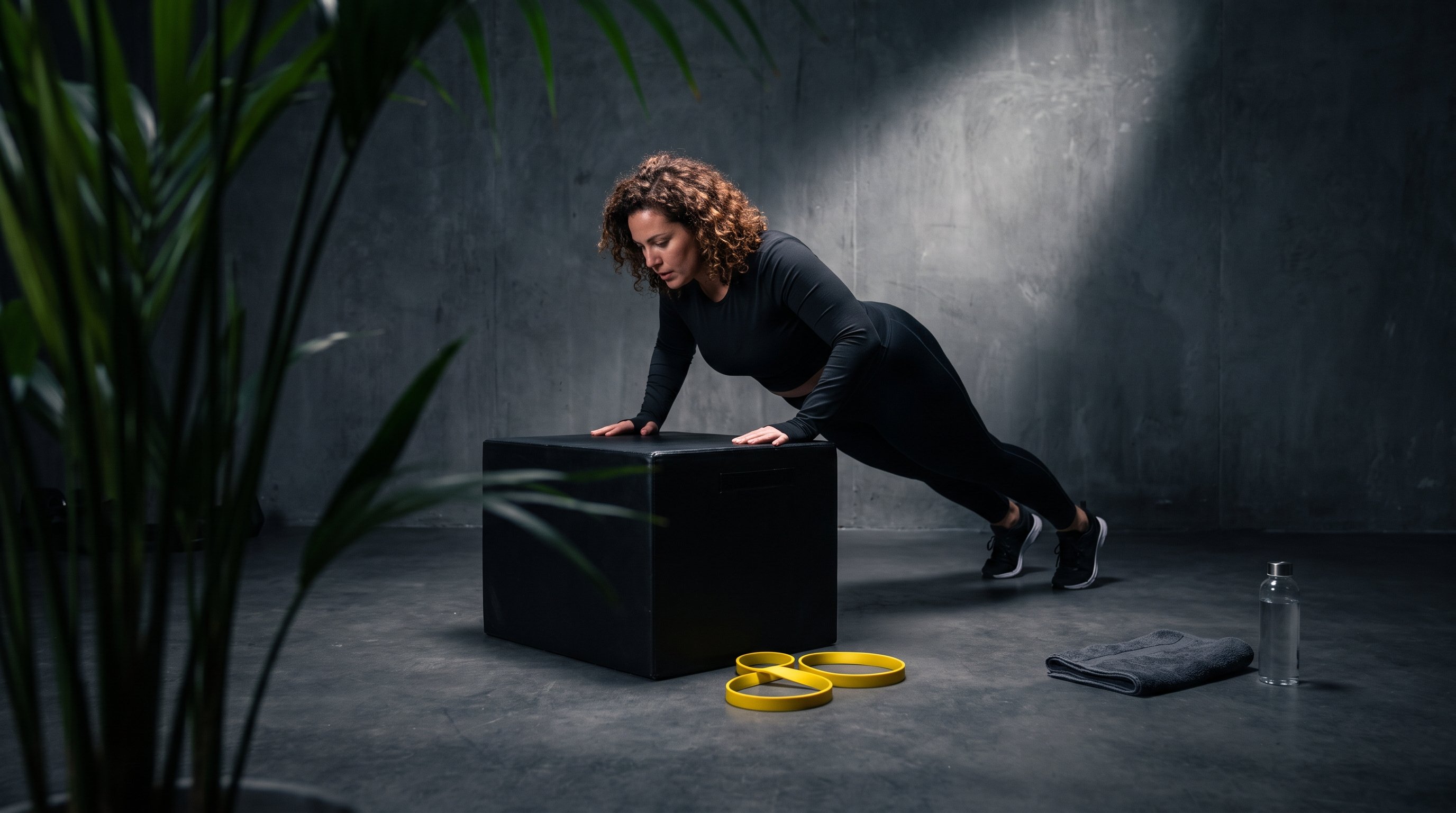
Doing the exact same press-up variation for months means the muscle has nothing new to adapt to. Adjust the incline, slow the tempo, or add a rep every couple of weeks so the challenge keeps moving.
Treating Training As the Whole Plan
Bodyweight sessions build and maintain muscle, but they don't control the food side of the equation. Pairing training with a meal plan built around food you already like closes the gap that training alone leaves open.
Skipping Rest Days Out of Guilt
Muscles adapt during recovery, not during the session itself, so training every single day without a break can stall progress rather than speed it up. A day of walking or full rest between harder sessions is part of the plan, not a day off from it.
Building a Calisthenics Routine You Keep With Herletics
Picking exercises is the easy part - staying consistent with them for months is where most routines quietly fall apart.
Herletics structures that consistency for you with a progressive Military Calisthenics Workout Plan built around your current fitness level, so the difficulty climbs as you do rather than staying flat or jumping too fast.
Alongside the workouts, it pairs a tailored meal plan with step, water and weight tracking in one place, plus wellness challenges designed to keep you showing up when motivation alone isn't enough.
Get Your Training Plan
Train Like a Warrior
Making Calisthenics a Habit That Actually Lasts
Calisthenics works because it asks for very little - some floor space and a handful of minutes - which makes it one of the easier habits to actually keep.
Pick three sessions for next week, write down which days, and treat that as the whole plan - a guided program can handle the rest of the detail once the habit is in place.
FAQ
It builds and strengthens muscle across the whole body, which changes tone and shape over time, but fat loss depends on the gap between what you eat and what you use. Pairing training with attention to food gives a fuller picture than training alone.
Yes - bodyweight exercises load muscles through angle and effort, not through machines, so a gym isn't required for the muscle to adapt. Many women train entirely at home with no equipment beyond floor space.
A short session of 15 to 20 minutes still gives muscles a reason to adapt, especially done a few times a week. Herletics breaks sessions down by fitness level so shorter guided workouts still fit into a packed day.
If the exercises never get harder, the muscle has already adapted to the challenge and has no reason to keep changing. Adjusting the angle, tempo or rep count every couple of weeks keeps that signal going.
Share this post