Military Calisthenics: Why Bodyweight Beats Gym Machines
By:Author:Herletics Editorial
Updated on:October 28, 2026
- Does Military-Style Bodyweight Training Really Work?
- Bodyweight Calisthenics Versus Gym Machines Compared
- Why Fewer Obstacles Beats a Harder Programme
- Who Bodyweight Training Suits and How to Adapt It
- Fitting Bodyweight Training Into a Full Week
- The Myth of Targeted Fat Loss From Calisthenics
- Building a Bodyweight Training Habit With Herletics
- Making Bodyweight Training Your Default Workout
Military calisthenics beats gym machines for most people because it uses your own bodyweight against gravity, needs no equipment, and travels wherever you do - which means more sessions actually get done.
Machines isolate a muscle and move it through a fixed path. Bodyweight work asks several muscle groups to stabilise, push, and pull at once, which is closer to how the body moves through an actual day.
This article looks at whether bodyweight training really works, how it stacks up against gym machines, who it suits, and how to fold it into a week that's already full.
Does Military-Style Bodyweight Training Really Work?
Yes, in the sense that matters most: it loads muscle enough to prompt adaptation, and it's structured enough that you can repeat it and track progress.
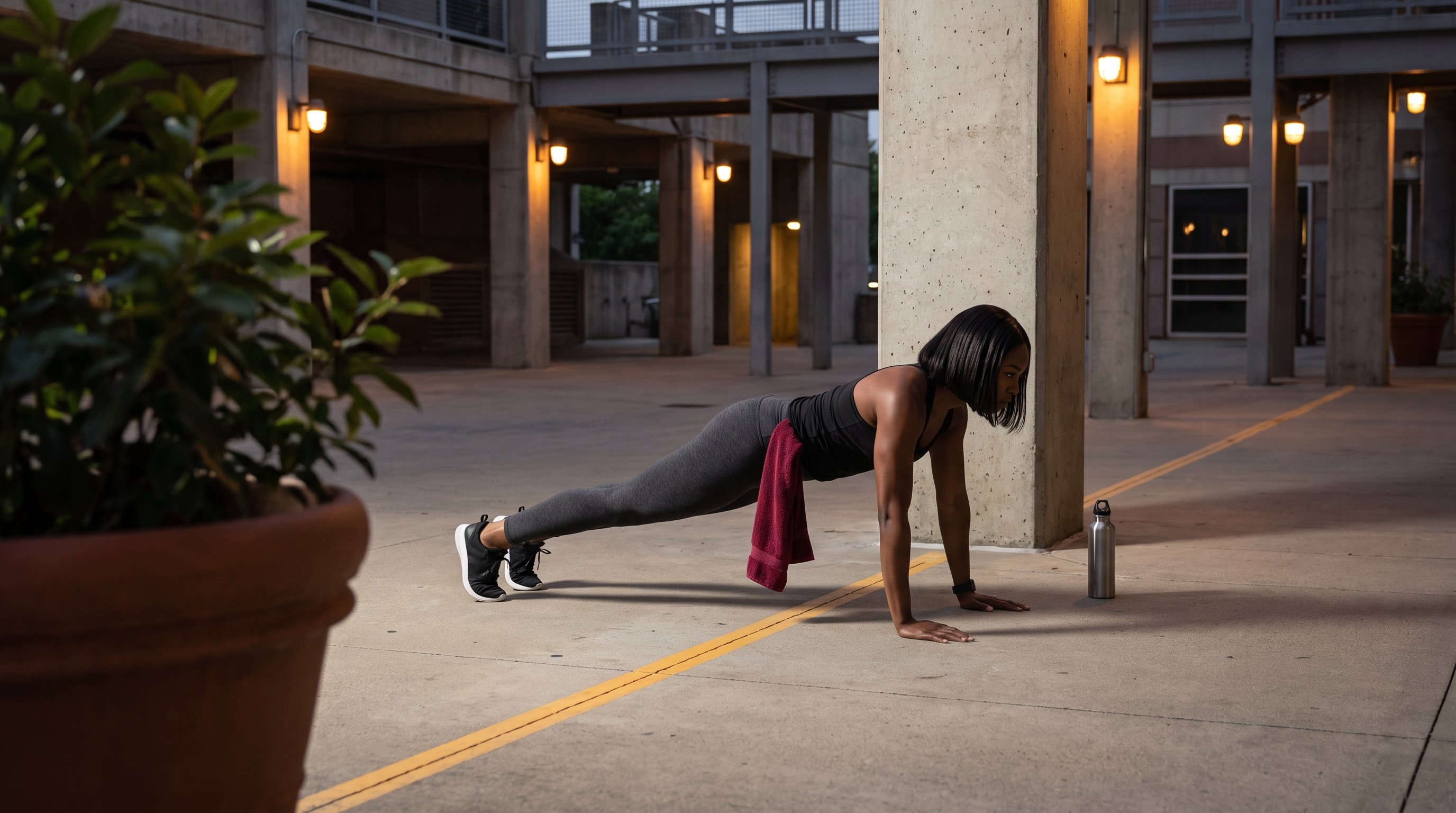
A press-up is a moving plank that happens to bend your elbows. It asks your chest, shoulders, triceps, and core to work together, so the body treats it as a full-body task rather than a single-joint one.
The Arithmetic Behind Progression
Consistent progression in repetitions drives adaptation. Scale that across push, pull, squat, and core patterns over a few months and the body has had a steady, repeatable reason to adapt.
None of this happens overnight, and nobody can promise a specific result by a specific week. What's reliable is the mechanism: consistent load plus gradual increases in reps, sets, or difficulty is what drives change, not the brand of equipment underneath you.
Bodyweight Calisthenics Versus Gym Machines Compared
The real decision most people face isn't about which is "better" in the abstract - it's whether a gym machine routine or a bodyweight calisthenics routine is the one they'll actually keep doing.
Here's how the two stack up on the things that matter day to day.
| Factor | Calisthenics | Gym Machines |
|---|---|---|
| Equipment needed | None | Full gym setup |
| Where you can train | Home, park, hotel room | Gym only |
| Muscles worked per move | Multiple groups together | Usually one group |
| Setup time | Near zero | Adjusting, queuing |
| Cost over time | Free | Membership fees |
Machines aren't a bad option, but they add friction: travel time, membership cost, and waiting for equipment to free up.
Bodyweight training removes most of that friction, which matters more than people assume when the goal is doing it again next week.
Why Fewer Obstacles Beats a Harder Programme
The honest argument for bodyweight training over a machine-heavy gym plan isn't that it's more intense - it's that it's easier to repeat.
A gym session with machines often means a drive, a wait for equipment, and a routine that falls apart the moment your schedule shifts.

A bodyweight session can happen in a bedroom, a hallway, or a hotel room in under twenty minutes, so missing the gym stops being a reason to skip training entirely.
If someone does three short bodyweight sessions a week for a year, that's roughly 150 sessions completed. A tougher gym routine that gets done twice a month because of logistics adds up to around 24 sessions in the same year.
More sessions completed, even at lower intensity each time, outperforms fewer sessions at higher intensity - because adaptation needs repetition, not a single heroic effort.
Who Bodyweight Training Suits and How to Adapt It
If You're Starting From Scratch
Beginners can start with knee press-ups, assisted squats, and short planks, building reps gradually rather than chasing a full press-up on day one.
If Your Week Is Already Packed
Short sessions of ten to fifteen minutes, squeezed between meetings or before the day starts, still count - frequency matters more than session length.
If You're Returning After a Break
Dropping back to easier variations of each movement and rebuilding reps over a few weeks avoids the frustration of starting too hard and quitting again.
If You Train Alongside Family or Friends
Bodyweight moves scale by difficulty, not weight plates, so two people of different fitness levels can do the same session side by side, just with different variations.
Fitting Bodyweight Training Into a Full Week
The practical question isn't whether bodyweight training works - it's whether it fits between the school run, the commute, and everything else on the calendar.
Short sessions done in a bedroom or kitchen, with no travel time attached, tend to survive busy weeks that gym plans don't.
This is where Herletics fits in: it offers a progressive workout plan tailored to your fitness level, so sessions stay short, structured, and realistic for a week that's already full.
Pairing that with a meal plan built around food you already like, plus trackers for steps, water, and weight in one place, keeps the whole picture - not just the workouts - easier to stay consistent with.
The Myth of Targeted Fat Loss From Calisthenics
No set of press-ups or planks will burn fat from one specific area of the body, no matter how the exercise is marketed.
The body draws on stored energy from across the whole system, not just the muscle being worked, so there's no exercise that reshapes one area on demand.
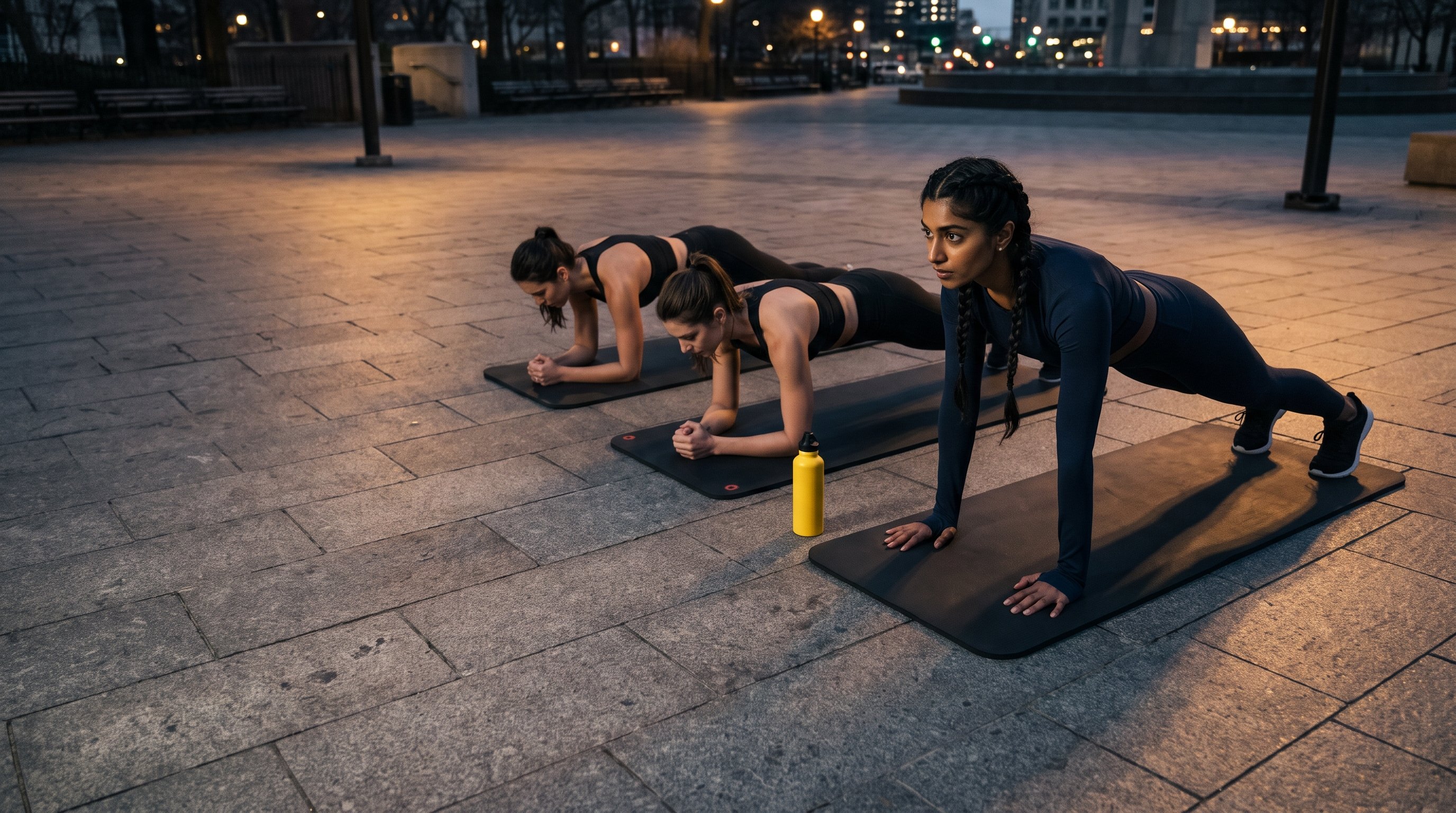
What bodyweight training actually does is build strength and muscle across the body over time, while a steadier eating pattern supports changes in overall body composition.
The real answer is less exciting than a quick fix but it's the honest one: consistent training plus sensible nutrition, sustained over months, is what moves the needle - not spot exercises.
Building a Bodyweight Training Habit With Herletics
Knowing the exercises is one thing - showing up for them week after week is the part that actually determines the outcome.
Herletics brings together guided bodyweight sessions, a customized meal plan with over 1000 recipes, and progress tracking for steps, water, weight, and fasting, so the whole routine lives in one place instead of scattered notes and guesswork.
Nutrition and health guides written by nutritionists, trainers, and psychologists sit alongside motivating challenges designed to keep consistency going past the first few weeks, which is usually where routines quietly fall apart.
Get Your Training Plan
Train Like a Warrior
Making Bodyweight Training Your Default Workout
Bodyweight training earns its place not because it's flashy but because it removes the excuses that stop gym plans from sticking - no commute, no equipment, no waiting.
The next useful step is simple: pick one bodyweight move, do a few reps today, and repeat it tomorrow, because Herletics works best as a structure around habits that are already forming.
FAQ
For most goals, yes - press-ups, squats, planks, and pull-style movements cover the major muscle groups without machines. The main trade-off is that very advanced strength levels eventually need added resistance, which can come later as skill and reps increase.
Weights add resistance faster, but bodyweight training still provides enough load to build strength, especially for anyone not already training consistently. The bigger factor is which one actually gets done three times a week rather than once a month.
Bodyweight sessions need very little room - a few square metres is enough for press-ups, squats, and core work. A hallway, a bedroom corner, or even an office floor during a break all work fine.
Sessions that are too long or too hard too soon are the most common reason people quit early. Herletics builds a progressive plan tailored to current fitness level, which keeps early sessions manageable enough to repeat.
Share this post